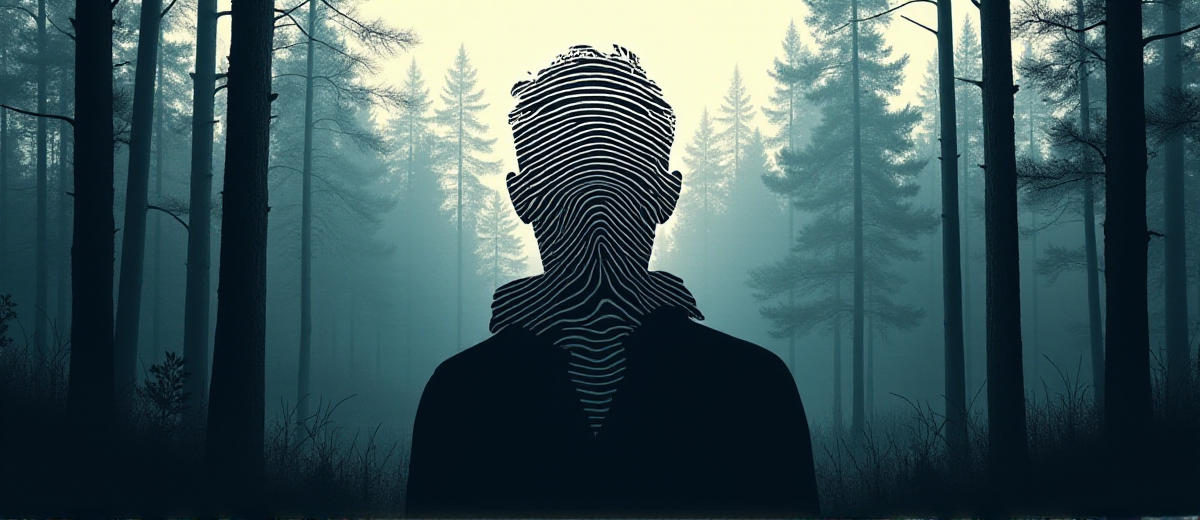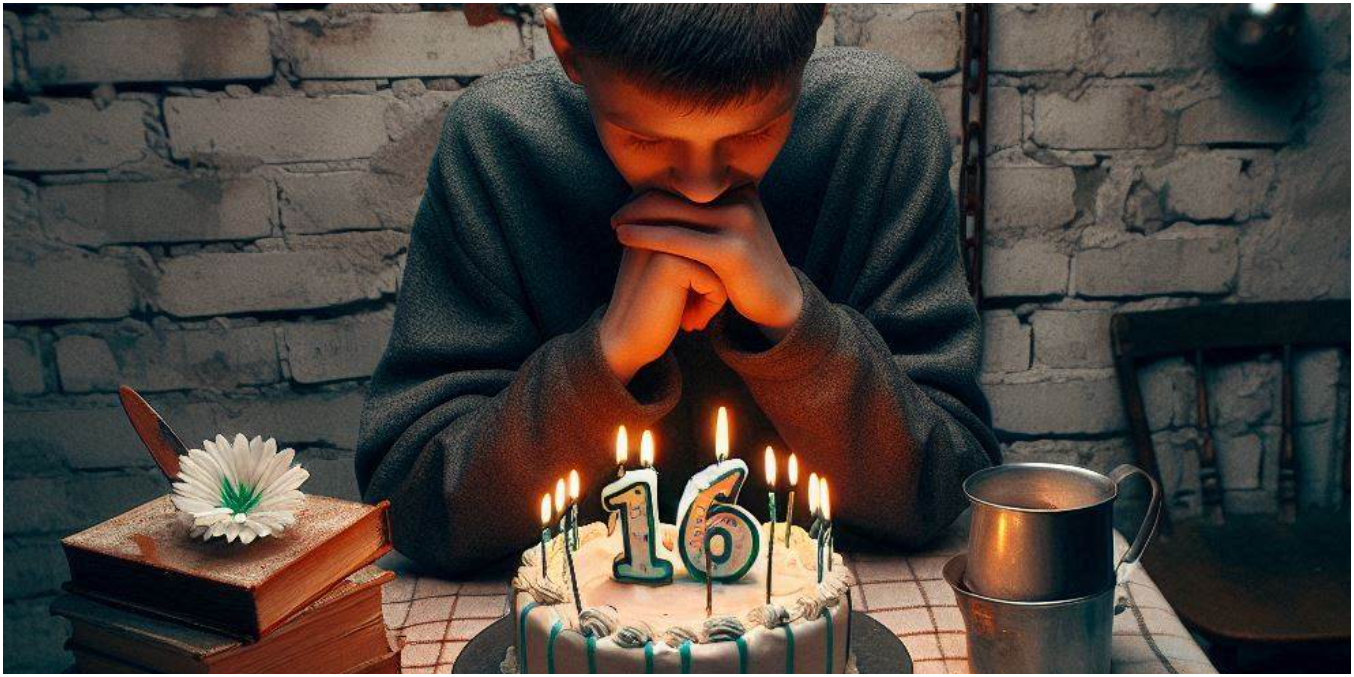
When I was freed from Canaan Land in 1999, just as I turned 18, I buried it all down deep inside. I tried to act as if the last two plus years hadn’t happened, telling myself that time and distance could erase the memories. I buried the pain beneath layers of silence, distraction, and the routines of everyday life, convincing myself that forgetting was the same as moving on. For years, I carried that weight quietly, outwardly functioning while inwardly haunted. What I couldn’t bury was the psychological toll it had on me. The memories lingered in the corners of my mind, always just beneath the surface, a constant reminder that the past doesn’t simply disappear, no matter how deep you bury it.
I never sought therapy like I should, but I shared it all with my future wife when we were dating. I told her all about it – the cult, the school, and Canaan Land. The look on her face and the shock in her voice gave it away; she instantly recognized that what happened to me was very wrong. Her validation helped me process things more and heal further, but I still wanted to push the painful memories aside and just try to live my best life. And so I tried to just move on, not knowing how much healing and work it would eventually take. Even if I did, my strategy would have been likely the same: take it one step at a time.
In 2023 – almost three decades after the fact – those small steps led me to do something I once thought I never would. I filed police complaints about the abuse of being isolated to Canaan Land in Big River. It wasn’t an impulsive decision; it was the culmination of many years spent wrestling with silence, with doubt, and with the lingering question of whether what happened to me mattered enough to be heard. Partly for myself, and partly in case others had similar complaints I could corroborate. I had learned that Nathan Schultz was hidden away there to escape his accusers. I had also learned of one person that was assaulted while they were there as a minor. What if they needed me to substantiate their information and their story? Reporting it all to police seemed like the most responsible thing to do. So I did. I sat down and meticulously recounted everything I could remember, unburying every detail, digging up every conversation, every sound and shadow from those days. For months, I exhumed my decades-old past with the meticulous handling of a forensic technician. Finally, I bundled the fragments of history together that I’d collected to tell the police the truth about Canaan Land, as best as I could reassemble it. In doing so, I finally gave voice to the version of me that had once been too broken to speak until now.
I stood in line at the police station with my statement folded in my hands, a few pages that somehow felt heavier than their weight. Each word on them had been written and rewritten, the kind of truth that takes years to gather the courage to say out loud. The smell of floor cleaner and summer mixed in the air, and the low hum of conversation from others waiting filled the lobby. I felt a flash of imposter syndrome as I waited for my turn. Self-doubt flooded my emotions and I feared I was only wasting their time. I wasn’t here because something had just happened. I was here because something had happened a long time ago in Big River, at a place called Canaan Land – for almost thirty years, it had previously been seemingly unimportant.
I kept glancing down at my written statement, half-expecting the words to change, to disappear, to decide they didn’t want to be said after all. Ahead of me, a blonde lady was reporting a hit-and-run in front of the police station. Behind me, a gruff old white-haired man filled out a form for an assault complaint in his care-home. Everyday problems, present tense problems. Mine was a ghost from the past, and I could already feel the questions that might follow: When did this happen? Why are you only coming forward now? What do you want us to do about it?
The truth was that I didn’t have all the answers. I just had my story and that had to be enough! After what felt like a long wait, I heard the officer call out “next”. When I finally stepped forward, I felt my throat tighten. I handed over the statement, feeling the paper brush my fingers as it left my hand. In that moment, I realized this wasn’t just about reliving something, it was also about letting it go, about giving it to someone else to hold, even if only for a while. Standing there under the fluorescent lights, I felt the weight shift – not gone, not even lighter yet, but finally shared. I told my story, and they listened.
I know that for some, questions about accountability and justice are paramount, and the desire to see wrongdoing confronted, to have someone answer for the harm they caused, can feel all-consuming. It’s not just a question of fairness; it’s a demand from the heart to be seen, to be acknowledged, to have the truth recognized. That fire inside can be both relentless and exhausting. But I’ve learned that the justice we imagine – the one that feels right, the one that restores balance – isn’t always the justice the system delivers. The courtrooms, the paperwork, the rules of jurisdiction, they move slowly, unevenly, and sometimes not at all. People move away. Evidence disappears. The wrongdoers vanish into a world that doesn’t care as much as we do. And suddenly, the vision of justice that kept you awake at night, that drove you to speak your truth, feels like it might never come to pass.
The emotions are raw. There’s anger that burns hot and doesn’t go away. There’s grief for the innocence of my childhood lost, for the trust betrayed, for the life I imagined before it all went wrong. There’s disappointment – sometimes so heavy it makes your chest ache – for a system that can’t always deliver what your soul demands. And beneath it all, there’s fear: fear that your voice won’t be heard, that the wrong will remain unacknowledged, that you’ll carry the weight of this alone.
Yet even in that weight, there’s a strange kind of strength. Speaking your truth, sharing your story, refusing to stay silent; those are victories the system can’t take from you. Healing can begin not when the law decides it’s time, but when you allow yourself to name the wrongs, to hold them out, and to finally find ways to move forward despite them. Justice may not arrive in the form we hope for, but writing your new story, reclaiming your voice, living your best life – that is a justice no one can deny.
Healing can begin not when the law decides it’s time, but when you allow yourself to name the wrongs, to hold them out, and finally to find ways to move forward despite them. Justice may not arrive in the form we hope for, but writing your new story, reclaiming your voice, living your best life – that is a justice no one can deny.
Having finally reached out to the Saskatoon Police Service, I let myself feel a flicker of hope. Maybe, after all these years, someone might look into what happened. Maybe someone in authority would finally say, “this was wrong”. I didn’t expect there would necessarily be a bunch of arrests or charges, but what if justice needed something to happen? What if the public interest needed my police report? So in having finally met with police and giving them everything, I also gave them my story, my reason for coming to them, and most importantly I gave them my trust that they would do what is right and necessary for the public interest.
Then came the waiting.
A year passed before I heard anything. A year of uncertainty, of cautious hope, of wondering what the truth would look like when it finally arrived.
And when it did, it wasn’t what I expected.
The Saskatoon Police Service told me it had all happened outside their jurisdiction – that Canaan Land was in Big River, and therefore, not their case. Fine, I could accept that. They graciously transferred my information file to the Big River RCMP and told me to expect a call.
That call wouldn’t come for another year.
Sometimes, I think about the what-ifs. What if I had known back then that I could have called the RCMP and reported my crisis? What if I had somehow found the courage, or even the clarity, to realize that what was happening to me was wrong, and that help existed somewhere beyond those walls? Maybe I would have tried. Maybe I wouldn’t have.
The truth is, the phones were locked in a room, guarded like a secret, and every movement we made was monitored. Privacy was a luxury we didn’t have. Even if we had somehow gotten to a phone, what would we have said? To whom? We didn’t know how to explain our reality, because it had been rewritten for us. Keith Johnson told us that what the adults did was for our own good, that submission was godliness, and that questioning authority was rebellion against God Himself. That kind of conditioning seeps deep into your bones. It doesn’t just silence you, it rewires you.
That kind of conditioning seeps deep into your bones. It doesn’t just silence you, it rewires you.
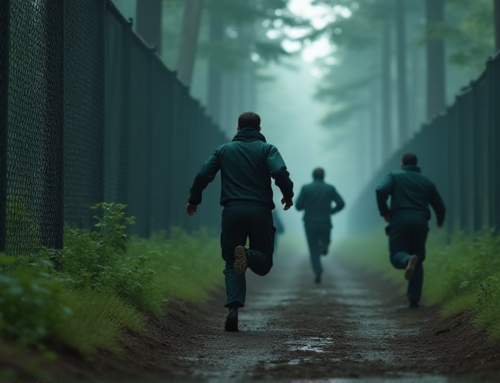
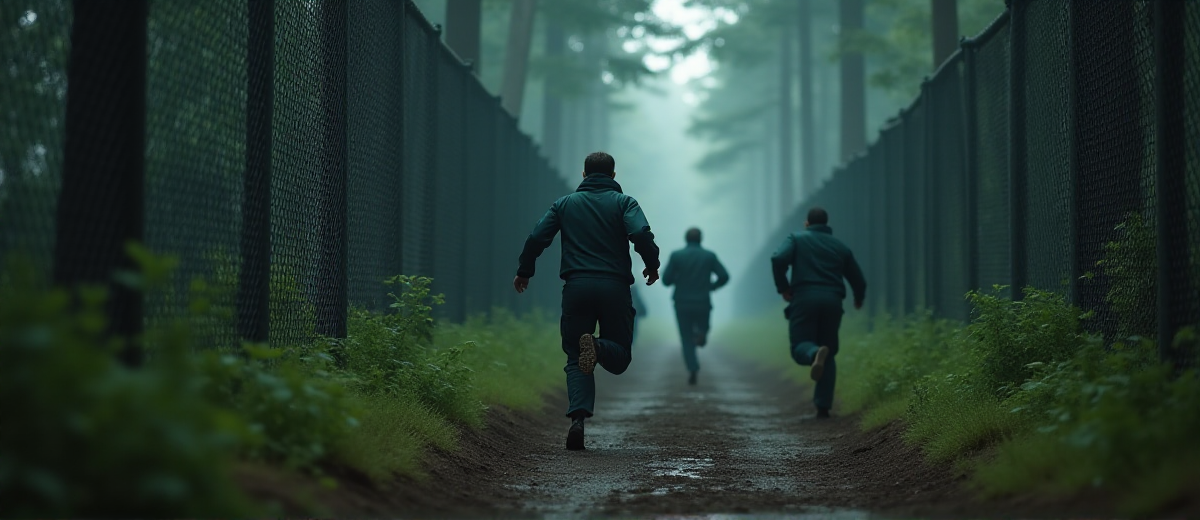
Running across the airfield toward town might sound like a simple act of defiance, but in that world, it would have been suicide – not physically, but socially, spiritually, and psychologically. We had been made to believe that anyone who left Saskatoon Christian Centre, or in my case, Canaan Land, was destined for destruction, that we would lose God’s protection, and that no one on the outside would believe us anyway. The fear of divine punishment was just as real as the fear of human retaliation. On a practical level, there was no realistic way out. The geography itself worked against us. Isolated, fenced in by miles of nothing, surrounded by adults who enforced obedience not just through rules, but through shame, guilt, and fear. We didn’t have identification, transportation, or even a sense of agency. Every escape scenario fell apart under the weight of the control.
Emotionally, the hardest part isn’t the logistics – it’s the realization of how fully they had taken ownership of my mind. That’s the part that still stings. Knowing that even if the door had been left open, most of us might not have run. Because we didn’t yet understand we were prisoners. We thought we were being ‘helped’.
When I think about those what-ifs now, it’s not just about whether escape was possible. It’s about how deep the captivity went. How it wasn’t just the locked doors or the hidden phones or the insanity of it all, but the way they made me believe I didn’t deserve to be free.
When the RCMP finally contacted me, the start of the conversation was promising. He sounded eager to help and wanted to know what they could do for me. He had read the file and was up to speed on my complaint. As we conversed, things started to become obvious and clear. The sound of their voice started to give it away. We talked about how they got the file, and details of where things are today. Then it came: the explanation was brutally simple; Canaan Land has been closed for almost three decades. The people involved are scattered across provinces and countries. I’m the only complainant. After nearly thirty years, it’s unclear whether a crime could even be established in my case.
So there it was. There were no villains in uniforms turning me away, no courtroom drama – just the quiet, bureaucratic finality of a system bound by time, evidence, and jurisdiction. It wasn’t rejection. It was reality. The kind of truth that doesn’t offer comfort, but commands acceptance.
It wasn’t rejection. It was reality. The kind of truth that doesn’t offer comfort, but commands acceptance.
This isn’t a defeat. It’s a lesson about limits; the limits of law, and of how justice is bound when too much time has passed. Make no mistake – what happened was wrong. Taking children, breaking them down, and calling it “faith” was not discipline, it was abuse. I was removed by the cult’s men from my home and family, and held in a gulag as a youth. Even though the police can’t follow through now because the place is closed and the people are gone and time has passed, the wrongness of it doesn’t fade with jurisdiction. The criminal justice system might not be able to call it what it was, but I can. And I will. It was abuse at the hands of Keith Johnson and his enablers.
Perhaps most frustrating of all is the lack of answers. One question in particular that has never been answered for me is: why? Why me? Why there? Why couldn’t I just live with my family? Just…why did they do it? It would appear that they will never have to give an account for those questions or their actions.
I share all this not to close a door, but to tell the truth about what happened, and what couldn’t. There are wounds that no courtroom can mend. There are traumas too old for the law to see clearly. Yet, that does not make them any less real. From the first night I wept at the abject hopelessness of my situation, to the daily grind of being forced to haul massive logs out of the remote wilderness as a youth, it all counts.
For those who are still seeking justice for what happened at Canaan Land in Big River, or anywhere like it, please know: your path might look different. Some doors may still be open to you. Walk through them if you can. But if, like me, you reach the end of what the criminal justice system can offer, know that this, too, is part of the story. It’s okay to feel grief, frustration, even rage at the lack of resolution. It’s okay to feel that it’s not enough.
Because sometimes, it isn’t.
The trauma of the past doesn’t vanish when the police close a file. The silence of the system does not erase the sound of what happened. But the truth still matters. The lessons still matter. The resilience we carry – that matters most of all. Even without charges. Even without formal investigations. Even without closure.
What are those lessons we should learn in all this? Are any of those lessons more important than the other? I think so. Looking back, the situation with Canaan Land taught me that the people who are supposed to protect us don’t always do so. Adults made choices that put me in harm’s way, claiming it was for my own good. The regulations and safeguards that should have been in place in my school were not there. That reality is painful, but it’s also a crucial lesson: authority doesn’t automatically equal safety. Questioning decisions, speaking up, and trusting your instincts are vital, even when those around you insist otherwise. Speaking out, reflecting on what went wrong, and holding ourselves and others accountable is a form of justice we can create. Recognizing these failures helps prevent them from happening again and reminds us that our voices, choices, and awareness are powerful tools for protecting ourselves and others.
Our voices still carry weight. Our stories still have power. And our courage to speak them after decades of silence is, in itself, a kind of justice.
Canaan Land in Big River is gone. But the truth of that place remains. And so do I.